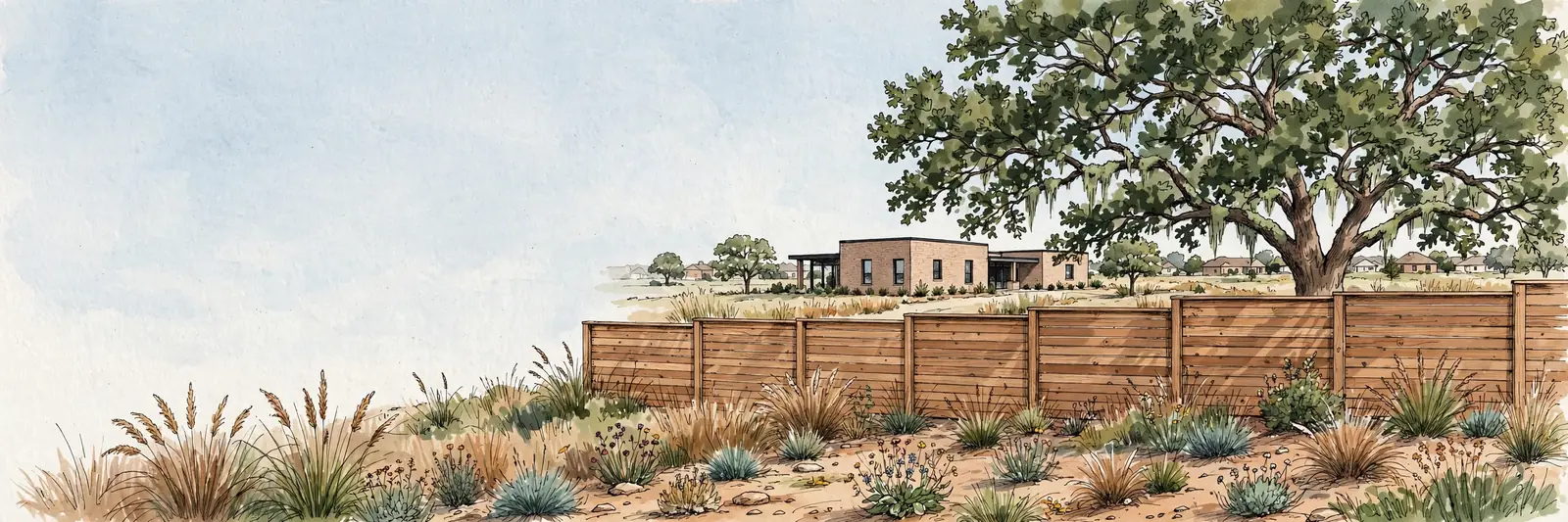
A well-built cedar fence in North Texas typically lasts 15 to 20 years, and 25 years is reachable with steel posts, good drainage, and regular staining. But Texas is hard on wood: weeks above 100 degrees, intense UV, expansive clay soil, spring storms, termites, and daily sprinkler soakings all take their toll.
The difference between a fence that dies at 12 years and one that is still straight at 22 usually comes down to a handful of build and maintenance decisions. Here is what shortens a cedar fence's life in Texas heat, and what adds years to it.
What cedar fence aging looks like year by year
Years 1 to 5: the easy years
A new cedar fence looks its best. Plan the first stain around year 2 or 3, once the lumber has dried from its initial moisture. Gate hardware may need its first adjustment as posts settle into North Texas clay.
Years 5 to 10: cosmetic changes
Unstained cedar silvers to a weathered gray. Minor warping and checking appear, especially on the sun-blasted west side of the yard. This is normal and not a structural problem.
Years 10 to 15: repairs begin
Individual pickets start to split or pull loose. Wood posts set in concrete often begin softening at grade level. Steel posts, if you have them, are still going strong.
Years 15 to 20: the decision zone
Pickets may still be serviceable while posts fail, or vice versa. This is when homeowners across McKinney, Frisco, and Allen weigh targeted fence repairs against full replacement.
The five things that kill cedar fences early in North Texas
1. Ground contact and poor drainage
Pickets that touch soil wick moisture upward and rot from the bottom. Keep the bottom of pickets an inch or two above grade and make sure soil slopes away from the fence line so water does not pool against it.
2. Wood posts set in concrete
Concrete looks protective but traps moisture against the post right at grade, which is exactly where rot starts. This is the most common reason an otherwise healthy cedar fence starts leaning around year 12. Galvanized steel posts set in concrete do not rot and routinely outlast the pickets by a decade.
3. Sprinkler overspray
A sprinkler head soaking the same stretch of fence every morning will rot cedar faster than almost anything else. Adjust heads so they water the lawn, not the lumber. If staining cannot keep up with daily soaking, no fence will last.
4. Texas UV and heat
Unprotected cedar dries out, checks, and cups under relentless sun. A water-repellent stain with UV blockers, reapplied every 2 to 3 years, is the single best thing you can do for the pickets. Professional staining typically runs $2 to $4 per linear foot.
5. Termites
Subterranean termites are active across North Texas and love wood in ground contact. Keep mulch, soil, and stacked firewood away from the fence line, and do not let pickets sit in dirt.
Posts matter more than pickets
Ask any fence contractor what fails first and most will say the posts, not the pickets. Upgrading from cedar posts to galvanized steel posts typically adds a modest amount per post and can add 5 to 10 years to the fence's service life. When the pickets eventually wear out, steel posts let you re-hang new pickets on a still-straight frame instead of starting over.
The staining schedule that adds years
Stain every 2 to 3 years with a quality water-repellent stain that includes UV protection. Do not stain brand-new lumber the week it goes up; let it dry for several weeks first so the stain absorbs properly. In the McKinney area, late spring or fall gives the best application weather, avoiding the extreme heat that makes stain flash-dry.
Learn more about cedar fence installation built for Texas conditions, or see how cedar compares to pine in our cedar vs pine guide.
Post depth, post material, and drainage decide whether your cedar fence lasts 12 years or 22. Call for a free estimate on a cedar fence engineered for North Texas soil and heat.