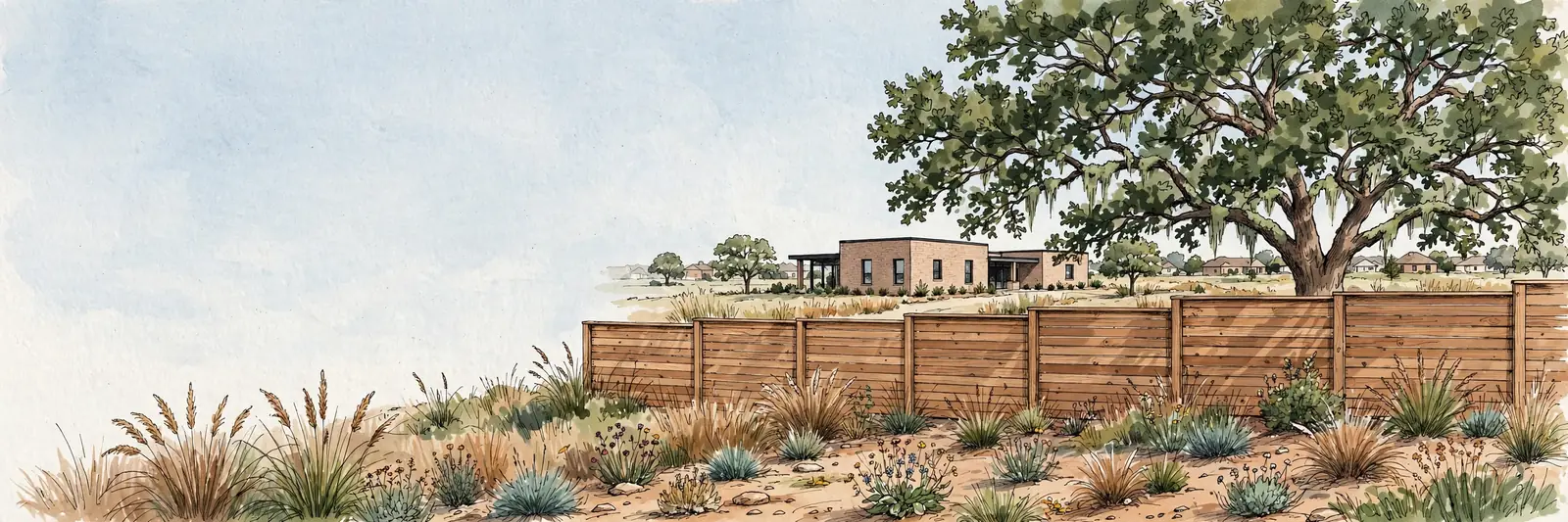
Cedar privacy fences built for Texas.
Cedar is the North Texas standard for a reason: it looks warm, holds stain beautifully, and resists rot and insects far better than pine. We build cedar fences the way this soil demands, with deep-set posts and honest lumber.
The North Texas backyard standard.
Drive through any established McKinney neighborhood and the backyard fence you see most is cedar. Homeowners choose it for the warm color, the way it takes stain, and a lifespan that runs 15 to 20 years when it is built right. Compared with builder-grade pine, cedar resists rot and insects naturally, which matters in a climate that swings from spring downpours to August drought.
But not all cedar fences are equal. The difference between a fence that lasts 18 years and one that leans at year eight is lumber grade, post depth, and fasteners. We use quality cedar pickets, set posts deeper than the builder standard for Blackland Prairie clay, and fasten with exterior-rated screws and nails that will not bleed rust down your pickets. If you are weighing cedar against pine, our cedar vs. pine comparison breaks down the real cost difference over the life of the fence.
Every cedar installation starts with a free on-site estimate. We measure, talk through styles and stain options, check HOA requirements for your subdivision in Frisco, Plano, Allen, or wherever you are, and give you a written price. No pressure, no games.
How we build cedar fences for clay soil
A cedar fence is only as good as its posts. In McKinney's expansive clay, wood posts set shallow will ride the soil's seasonal swelling and shrinking until the fence leans. We set posts deeper than the typical builder installation, with concrete footings sized for the load, so the fence starts straight and stays straight.
Where lean is likely, along greenbelts, corner lots, and low spots that hold water, we recommend steel posts with cedar pickets and rails. Steel does not rot, warp, or feed termites, and it can be sleeved or painted to blend with the wood. It costs more up front and pays for itself by eliminating the most common failure point in a wood fence.
Above ground, the details matter too. We use exterior-rated fasteners that will not streak, rails secured to hold pickets true, and picket spacing that accounts for how cedar moves with humidity. Small choices, big difference in how the fence looks at year ten.
Cedar styles and options.
Board-on-board privacy
Overlapping pickets for full privacy with a finished look on both sides. The most popular choice in McKinney subdivisions, and it handles wind better than solid face-nailed runs.
Shadowbox
Alternating pickets front and back for a fence that looks finished from either side and lets air pass through. A smart pick for windy exposures.
Face-nailed privacy
The classic flat-face privacy fence at the most economical cedar price point. Clean, simple, and effective.
Cedar with steel posts
All the warmth of cedar with posts that will never rot. Our recommendation for low spots, greenbelts, and anyone who never wants to think about posts again.
Horizontal cedar
A modern look with horizontal pickets that suits contemporary homes. Built with the same deep-set posts and quality lumber as our traditional styles.
Staining and sealing
A quality exterior stain protects your investment from Texas sun and rain. Choose a natural cedar tone or a color your HOA approves.
Cedar grades: what you are actually buying.
Western red cedar is the premium picket, with tight grain and natural oils that resist decay. Most residential fences use a #2 grade or better, which allows some knots while keeping the picket structurally sound. We will show you the difference at the estimate so you know what your money buys.
Picket thickness matters too. A true 5/8-inch or 3/4-inch picket resists warping far better than the thin 1/2-inch pickets found on bargain fences, and it holds fasteners without splitting. Dog-ear tops are the classic look and shed water well; flat tops give a cleaner, more modern line. Either way, we use full-thickness pickets because thin pickets are where cheap fences start to fail first.
Be wary of quotes that seem too good to be true. They usually mean thinner pickets, wider spacing, shallow posts, or fasteners that rust. A fence is a 15 to 20 year purchase, and the cheapest bid is rarely the cheapest fence. Our wood fence cost guide shows what drives the price so you can compare bids apples to apples.
HOA approval, handled.
Most McKinney-area HOAs require architectural approval before installation, with rules on height, material, style, and stain color. We build to these requirements every week and can help you prepare the drawing and details your HOA asks for, so approval comes back without delays.
Frequently asked questions.
A well-built cedar privacy fence here typically lasts 15 to 20 years, longer with stain and prompt repairs. Builder-grade pine fences often start failing in 8 to 12 years, especially where clay soil movement works the posts loose.
Board-on-board costs more but gives full privacy, looks finished on both sides, and lets wind pass through, which helps in storm season. Face-nailed is the economical classic. We recommend based on your lot, exposure, and budget.
In low spots, along greenbelts, or anywhere drainage is poor, yes. Steel posts eliminate rot, the number one killer of wood fence posts in clay soil. The added cost pays back in lifespan.
Cedar will survive without stain, but it will gray and check faster in Texas sun. A quality stain every few years protects the wood and keeps the color you chose. We offer staining as part of installation or as a standalone service.
In most McKinney-area subdivisions, yes. HOAs typically regulate height, material, style, and stain color. We can help you put together the submittal with the drawing and details they ask for.
It depends on linear footage, style, gates, terrain, and demolition of the old fence. Our wood fence cost guide explains the factors, and every project starts with a free written estimate.
Ready for a cedar fence that lasts?
Call (214) 555-0182 for a free on-site estimate anywhere in McKinney and the surrounding North Texas communities.