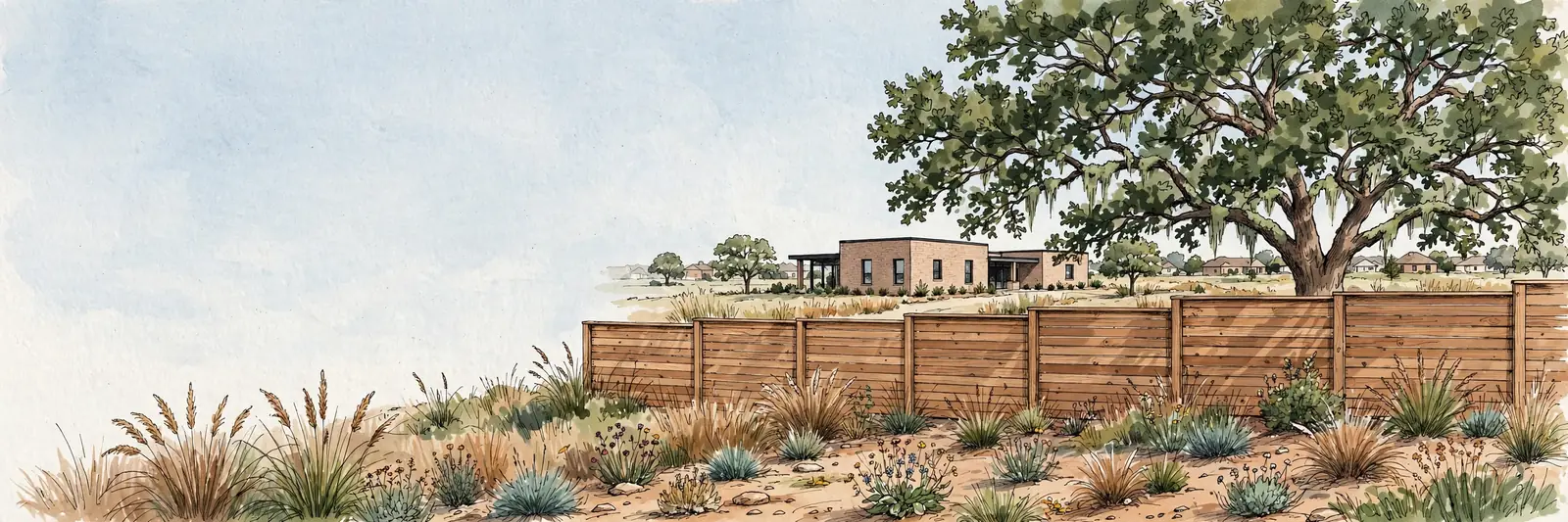
If you are pricing a new wood fence in McKinney, here is the short answer: most homeowners pay roughly $28 to $55 per linear foot installed for a cedar privacy fence, and $22 to $38 per foot for pressure-treated pine. For a typical 150-foot backyard, that puts most cedar projects between about $4,200 and $8,250, with pine landing lower.
Those are planning ranges, not quotes. Your actual price depends on fence height, lumber grade, gates, terrain, whether an old fence has to come out, and a few North Texas curveballs like expansive clay soil and HOA design rules. This guide breaks down each piece so you can budget with confidence and compare bids apples to apples.
Wood fence cost per linear foot in McKinney
Fence contractors in the McKinney area almost always price by the linear foot, installed. The table below shows typical installed price ranges for the most common wood fence builds around North Texas.
| Fence type | Height | Typical installed range |
|---|---|---|
| Pressure-treated pine privacy | 6 ft | $22 to $38 per ft |
| Western red cedar privacy | 6 ft | $28 to $48 per ft |
| Western red cedar privacy | 8 ft | $38 to $60 per ft |
| Cedar board-on-board | 6 ft | $32 to $55 per ft |
| Horizontal cedar slat | 6 ft | $40 to $65 per ft |
| Cedar picket (spaced) | 4 ft | $20 to $32 per ft |
Cedar costs more than pine because the lumber itself costs more and it is the material most McKinney-area HOAs prefer. Board-on-board and horizontal styles use more lumber and more labor, which is why they sit at the top of the range. A simple 6-foot cedar privacy fence remains the most popular choice in neighborhoods across Frisco, Plano, and Allen because it balances cost, privacy, and curb appeal.
Walk your property line and measure, or pull the footage from your plat or survey. Multiply your linear feet by the per-foot range above. A 180-foot cedar privacy fence at $28 to $48 per foot suggests a planning budget of roughly $5,040 to $8,640 before gates and extras.
What makes your fence cost more (or less)
Two neighbors with the same size yard can get very different bids. Here are the line items that move the number:
Linear footage and height
More fence means more material and labor, but longer runs often earn a slightly better per-foot rate because mobilization costs get spread out. Going from 6 feet to 8 feet adds roughly 25 to 40 percent, since taller fences need longer posts, deeper footings, and more pickets.
Lumber grade
Not all cedar is equal. Higher-grade boards with fewer knots cost more but look better and resist warping. Ask any bidder which grade they are quoting, because a low bid sometimes hides lower-grade lumber.
Gates
Each gate adds hardware, framing, and labor. A standard 4-foot walk gate typically adds $250 to $450 to a project, while a wide double-drive gate can add $500 to $900 or more depending on the build.
Tear-out of an old fence
Removing and hauling away an existing fence usually adds $3 to $6 per linear foot. Concrete footings from old posts take real labor to dig out, especially in North Texas clay.
Slope and access
Sloped lots need stepped or racked panels, which take more time. Tight side yards, no trailer access, or rock just below the surface all add labor. Most of McKinney is relatively flat, but infill lots and new developments can surprise you.
Stain and seal
Staining a new wood fence typically adds $2 to $4 per linear foot. It is optional in year one, but in the Texas sun it pays for itself by slowing UV damage and checking.
North Texas factors that affect fence cost
Fence pricing in McKinney is not the same as fence pricing in milder climates. Local conditions change how fences get built.
Expansive clay soil
Much of Collin County sits on expansive clay that swells when wet and shrinks in summer drought. Posts set too shallow will heave and lean within a few seasons. Good local builders set posts deeper, often 30 inches or more, and use more concrete per post than the national average. That is real material and labor, and it is worth paying for.
Summer heat
Weeks above 100 degrees dry lumber fast. Boards installed green can shrink, cup, or twist as they acclimate. Experienced crews account for spacing and picket selection so the fence still looks right after its first Texas summer.
HOA rules in McKinney, Frisco, Plano, and Allen
Most master-planned communities around McKinney allow wood fences but regulate them: 8-foot maximums in rear yards are common, some HOAs restrict stain colors or require specific cap and trim details, and nearly all require architectural review approval before work begins. If your Prosper or Frisco HOA mandates cedar with a particular stain, that narrows your material choice and your budget. Build HOA approval time, often 2 to 4 weeks, into your schedule.
Permits
The City of McKinney requires a fence permit for most new installations, and neighboring cities have their own versions of the same requirement. Permit fees are modest, but the paperwork and inspection scheduling are part of what a professional bid covers. Be wary of any quote that suggests skipping the permit.
Repair vs. replace: when each makes sense
You do not always need a full replacement. If the posts are solid and the damage is limited to pickets or a single leaning section, a repair often costs a fraction of a new fence. Replacement makes more sense when posts are rotted at grade, multiple sections lean, or the fence is near the end of its service life. A good contractor will tell you honestly which camp you are in, because a repair today that fails in two years helps no one.
How to get an accurate price for your yard
Online calculators get you in the neighborhood, but an accurate number requires eyes on your property. Here is how to get bids you can actually compare:
- Measure your footage and note gates, slopes, and anything unusual like drainage easements or shared fence lines.
- Get 2 to 3 on-site estimates from local McKinney fence contractors who pull permits and carry insurance.
- Compare identical specs. Make sure every bid lists the same lumber species and grade, post type and depth, gate count, tear-out, and stain.
- Ask about the posts. In North Texas clay, post depth and concrete volume matter more than picket choice for long-term straightness.
- Check HOA approval first. Do not schedule an install until your architectural review is approved, or you may pay to redo work.
If you are in one of the surrounding communities, the same process applies whether you need fence installation in Frisco, a fence company in Plano, or fences in Allen. Local soil and HOA conditions rhyme across the area even when the city rules differ in the details.
Ranges are useful for budgeting, but only an on-site measurement produces a real quote. Call for a free on-site estimate anywhere in the McKinney area.